
onions-to-senegal

Study Trip to Senegal

Last week Hazera, together with van Meir and a group of onion growers from the Netherlands and Belgium, visited Senegal. We were able to see with our own eyes where our Dutch onions end up. Every year, Senegal imports about 180 to 200,000 tons of Dutch onions between September and January. They are unloaded in the port of Dakar where they are cleared through various importers and then distributed throughout the country, but also to neighboring countries such as Gambia, Mauritania, Mali etc.


from ship to land

Manually unloading a ship loaded with 55,000 tons takes about a week. In this case, 50-kg bags of rice. The border for onions is currently closed. Onions are imported both loose and by container.

Good quality is important

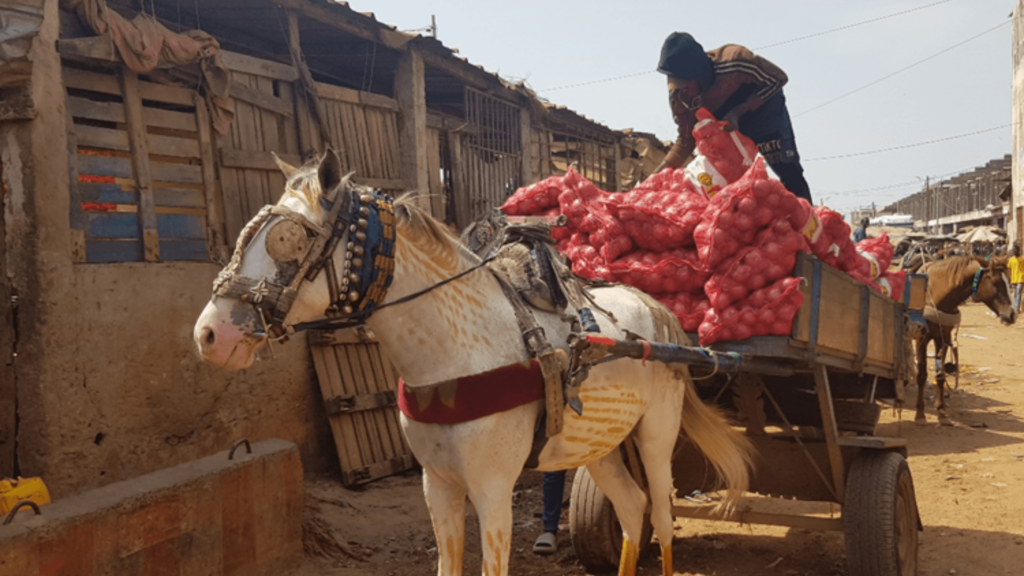
For this market, it is important to export good quality onions. This is because the road from the Dutch onion to the consumer in Senegal is very long. After the onion arrives by boat in Dakar, it is transported by truck or horse-drawn cart to the small local markets and stores. Temperatures during that period are around 30 degrees and the onions cannot be refrigerated.
on the market

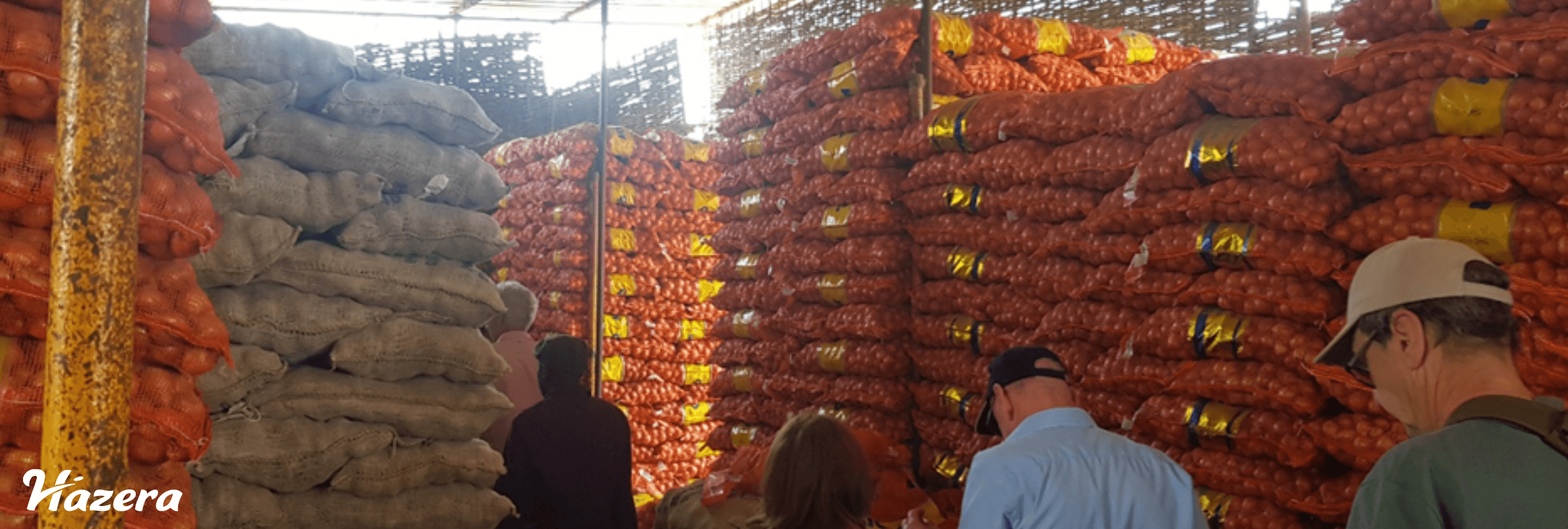
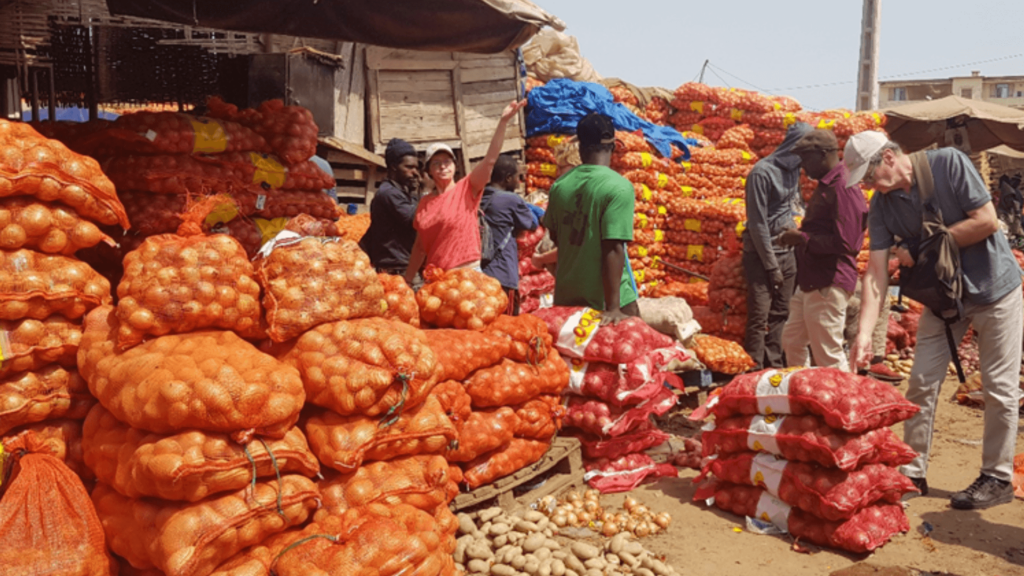
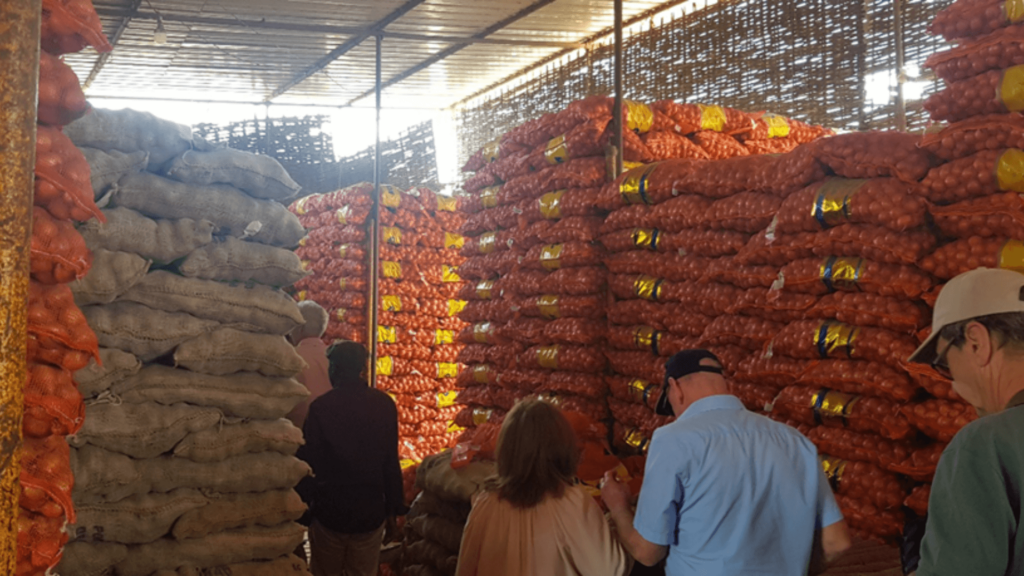
The whole sale market in Dakar

The wholesale market in Dakar

by horse and carriage

Local transportation from wholesale market to smaller markets and stores
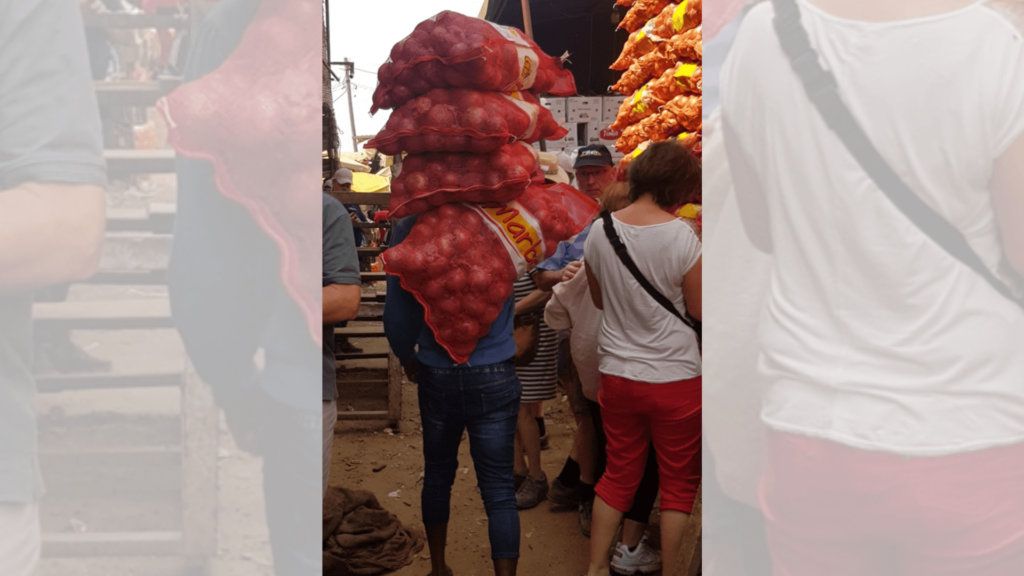
Other laws

Our health and safety laws do not apply there

Other living conditions

The Senegalese consume a lot of onions, it is estimated that one consumes about 30-35 kg per person per year. Because most Senegalese do not have a refrigerator, shopping is done daily and people buy only what is needed for that day’s meal. So that also means that often only 1 or 2 onions are bought at a time. Currently, onions cost consumers about €1.10 per kg. These are very high prices because the minimum daily wage is € 2.5 per day. In addition, most people do not have steady work, the unemployment rate is 70%.

Different quality

Onions are widely grown in Senegal in the dry season, the largest area by many small growers scattered throughout the country in areas where groundwater is available. Often these are small plots located against the dunes along the coast. Sowing takes place from early October to early February. From the moment the local onions are on the market, the border is closed to imports. The locally produced onions do not have the quality as we know it and therefore can only be stored for a very short time. It is estimated that about 13,000 ha of onions are grown in Senegal, of which about 11,000 ha are grown by the smaller growers.
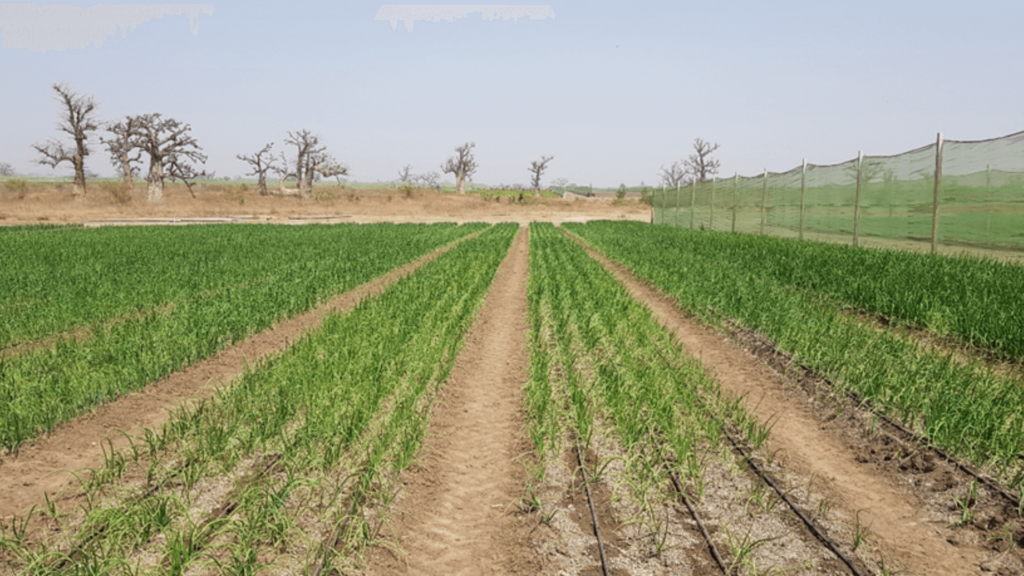
Onion cultivation with drip irrigation

Onion cultivation with drip irrigation

Talking to the companies

During the trip, we also had the opportunity to visit about four large farms in the region east of Dakar. Primeale has been growing mainly beans, sweet corn and spring onion for export to Europe for 15 years. A huge company that employs 4,500 people. Since about 5 years QVS and Lion Agricole are active in the same region, they focus mainly on production for the local market and produce a lot of onions. About 3 years ago QFS started, they produce mainly beans for export and a lot of other products for the local market like onions, but also carrot, pepper, tomato and lettuce.

All these companies work 100% with drip irrigation and pump water from sometimes up to 300 meters deep. It is also true of all farms that they employ many people. The weeding, harvesting and sorting is all manual work done mainly by women. The men do the maintenance of the machines, seeding, laying the drip hoses and loading/unloading the trucks. The staff is brought and picked up daily by local transporters, quite a logistical operation.

Thanks to van Meir and Hans Ham for the excellent organization.

Want to know more? Contact our crop specialists Onion!
More News

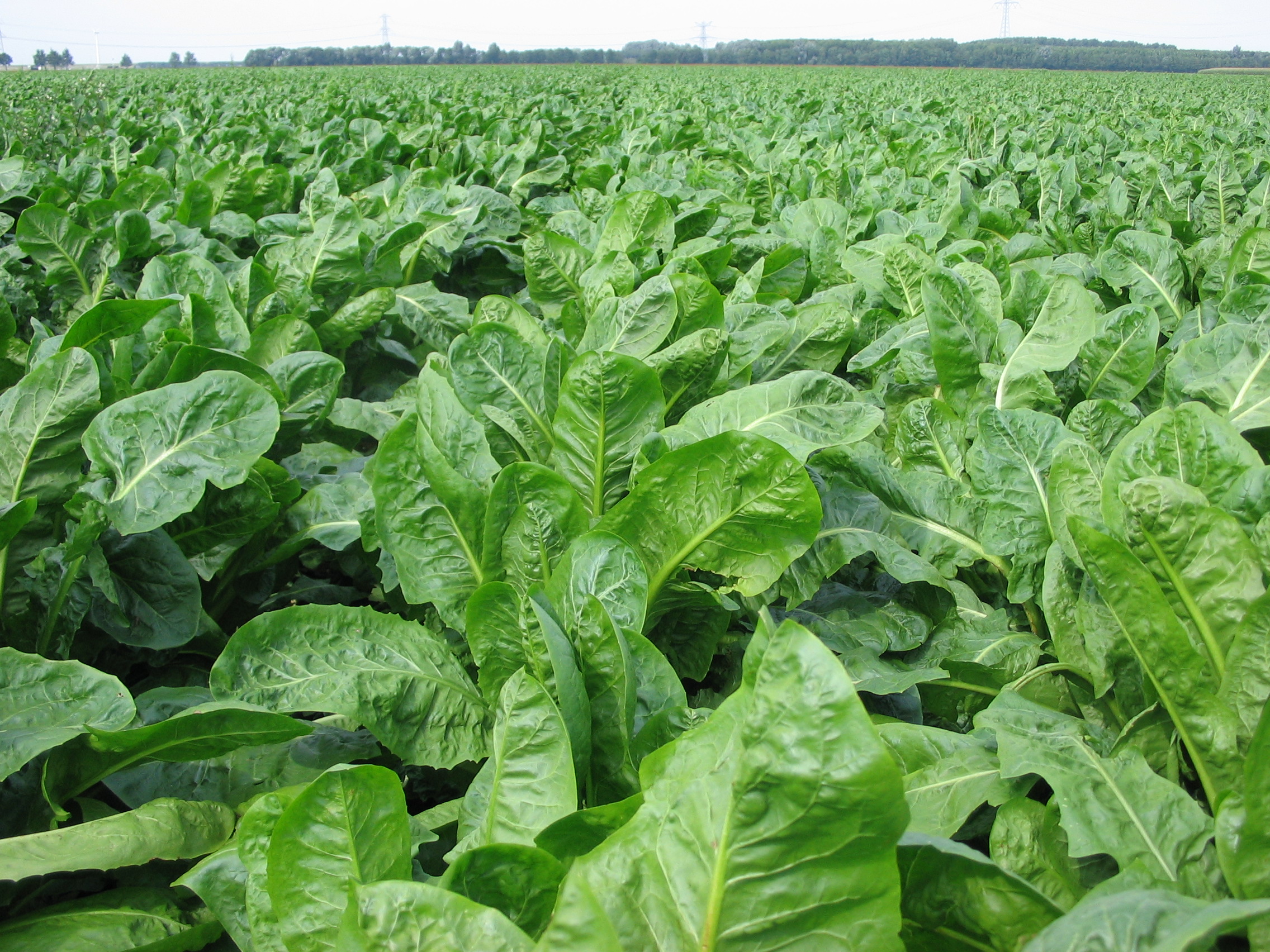
witlof-veld

Come and see, our Chicory!

February 14. It’s Valentine’s Day. The day you put your loved one in the spotlight. In this article we tell you a bit more about our much-loved chicory! What are the developments of chicory in Hazera? And what makes growing this vegetable so much fun? We give you the answers.

What exactly is chicory?

First, some background information. Chicory is originally a Belgian product. It is a relative of endive and is widely used in European cuisines, especially in Belgium, France and the Netherlands. It grows in dark, shady environments and has a mild, bitter taste. Chicory is often cooked and used in salads, soups and stews. It is rich in nutrients, such as vitamins, minerals and antioxidants, and is often considered a healthy and nutritious vegetable

In conversation with a Hazera Hero!

Twelve years ago, Denis Desrumaux started working for Hazera. He has a background as a chicory grower and is now Crop Specialist Chicory. “When I started at Hazera, we had about 3% market share. Our first successes were mainly Platine and Zilia. By now we have been working for 10 years with our main varieties Topscore (semi-early variety) and Flexine (late variety). We now have an 85% market share in the Benelux. At this moment Maroline, Ecrine and Beguine are our early varieties, Topscore and Daufine and Laurine our middle varieties, Flexine and Djine our late varieties. With this fine portfolio of varieties, chicory growers can supply the market year round with the beautiful golden yellow tasty heads.

Denis en zijn witlof

Explaining the process, with love!

Explaining the process is no problem for Denis: “Chicory is a biennial product. The first year, in May, the seeds are placed in the field and a taproot develops there. After 130 to 170 growing days in September, October, November and December, those taproots go out of the field and enter large coolers. Here they are frozen to -1.5 degrees and the following year they take out those taproots little by little. Then they are put onto trays or in the ground. Chicory from the ground is ground chicory and chicory from the trays with water is called Hydro chicory. The second year we take them out and have varieties for early, mid, and late season. This allows them to grow chicory year-round with taproots.

What makes being a chicory grower so much fun?

Denis: “The best thing about growing chicory is that it is a very specific crop that is technically very difficult. Not everyone can just dive into it. You have to work at least 3-4 years before you know how it works. That’s the fun part. We take our growers by the hand to get the best results. It’s a two-year crop, so renewal doesn’t come very quickly. You need two years to see if your product is adequate. This you want to see several years in a row. Especially if you come up with a and new product. Then you need at least 6-7 years before you can actually really break through. With other crops, it goes much faster.

And … what makes being a chicory grower for Hazera so much fun?

Denis: “Working with Hazera for farmers. We have a very strong, warm relationship with them. I like that. It’s always nice to work with people who know the market and of course also think about the long term.”

Want to know more about chicory? Then get in touch!

More News

Hazera center-stage at MOP Arava Israel 2023 annual expo

Want to be the first to see the next generation of the Israeli tomato and be impressed by the new variety portfolio of Hazera? Join us for a unique opportunity and meet our team for a deeper understanding of the quality, performance and potential of Hazera’s new varieties.

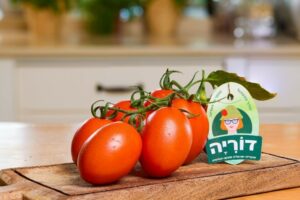
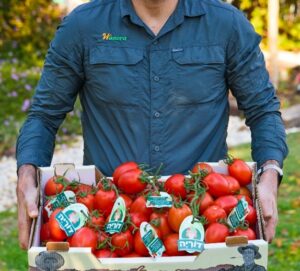
The exhibition in the Arava is the perfect opportunity to get a glimpse of the future of the Israeli tomato with “Rubicon”/ “Doria” – a new Saladette tomato variety that is suitable for picking in a cluster. The tomato is delicious, firm, has a long shelf life and excellent preservation on the plant, as well as a bright red and attractive fruit.

Rubicon (“Doria”): from the grower to our plate. Photograph: Ofer Hajub

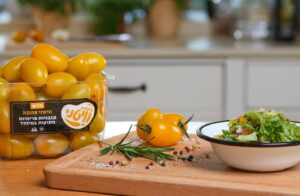
In addition to “Rubicon”, Hazera- a world pioneer in the seed industry, will launch the “Yellow Whitney” – the heart tomato that made Israelis fall in love and is now available in red and yellow. The Yellow Whitney is the first yellow Midi Plum tomato of its kind – it is extremely tasty, has impressive yellow fruit, is very firm and crunchy and has a strong plant and a high yield.


Yellow Whitney. Photograph: Ofer Hajub

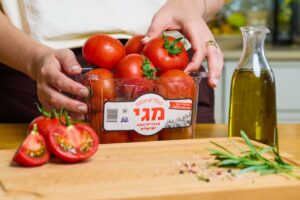
Come see and taste! Still young at heart, the queen of flavor, The “Maggie” tomato, is ringing in its first decade with a party! Maggie is known as a high-quality Israeli tomato, with a juicy green gel, which gives it a fine taste and rich aroma. Maggie is grown throughout the year nationwide in Israel among selected farmers only and packaged in a closed and marked package – and now with a new branding in honor of its 10-year celebration.


Maggie “the Taste” Tomato. Photograph: Ofer Hajub

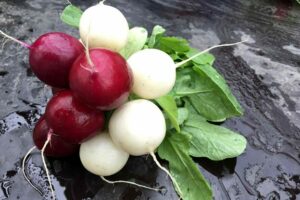
At the exhibition, Hazera will launch new varieties of radishes: “Whitella” in white and “Purpella” in purple: round radishes for growing in open and closed areas, with impressive and strong colors, suitable for growing all year round with a high yield and excellent internal quality.


New radish varieties. Photograph: Hazera

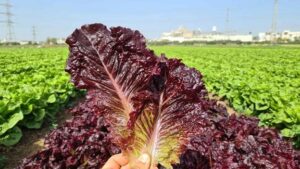
Come and get an impression of a red, curly romaine lettuce: “Purple Heart“. Beyond the nutritional benefits of romaine lettuce, which is 5 times richer in vitamins than other types of lettuce, the variety “Purple Heart” is characterized as crunchy and extremely tasty and has a bright red color that penetrates deep into the leaf.


“Purple Heart”. Photograph: Hazera

Come and meet the team of Hazera at the Araba expo taking place on February 15 and 16 in Ein Hatzeva, Israel and join “Rubicon” /”Doria” on her fresh produce journey from the field, to the retailers, and straight to her kitchen!

More News